B1#262026
Tractable and Expressive Generative Modeling with Probabilistic Flow Circuits
Neurosymbolic AI: Foundations and Applications, pages 183–222. Wiley Online Library, 2026
Research Agenda
I develop probabilistic AI systems that combine expressive generative modeling, tractable inference, and trustworthy reasoning. My work centers on probabilistic circuits and related generative models that represent uncertainty explicitly, answer probabilistic queries efficiently, and support reliable decisions under missing, noisy, or conflicting evidence.
Model
complex structured distributions
Infer
probabilistic queries efficiently
Evaluate
learning dynamics and reliability
Deploy
with robustness and human guidance
Research Map
The sections are connected by a single question: how can uncertainty-aware models become expressive enough to use, reliable enough to deploy, and structured enough to inspect?
Core Question
How can generative models capture complex data distributions while preserving useful probabilistic inference?
Approach
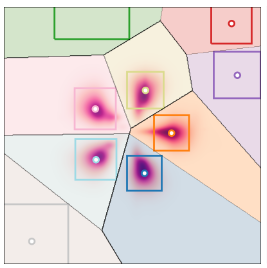
I develop probabilistic generative models that combine the semantics of tractable probabilistic circuits with the representation power of flows, geometry-aware routing, and learned representations.
Visual Model
Research Problems
Increase expressivity without silently breaking tractable inference.
Align neural transformations and local geometry with circuit factorization.
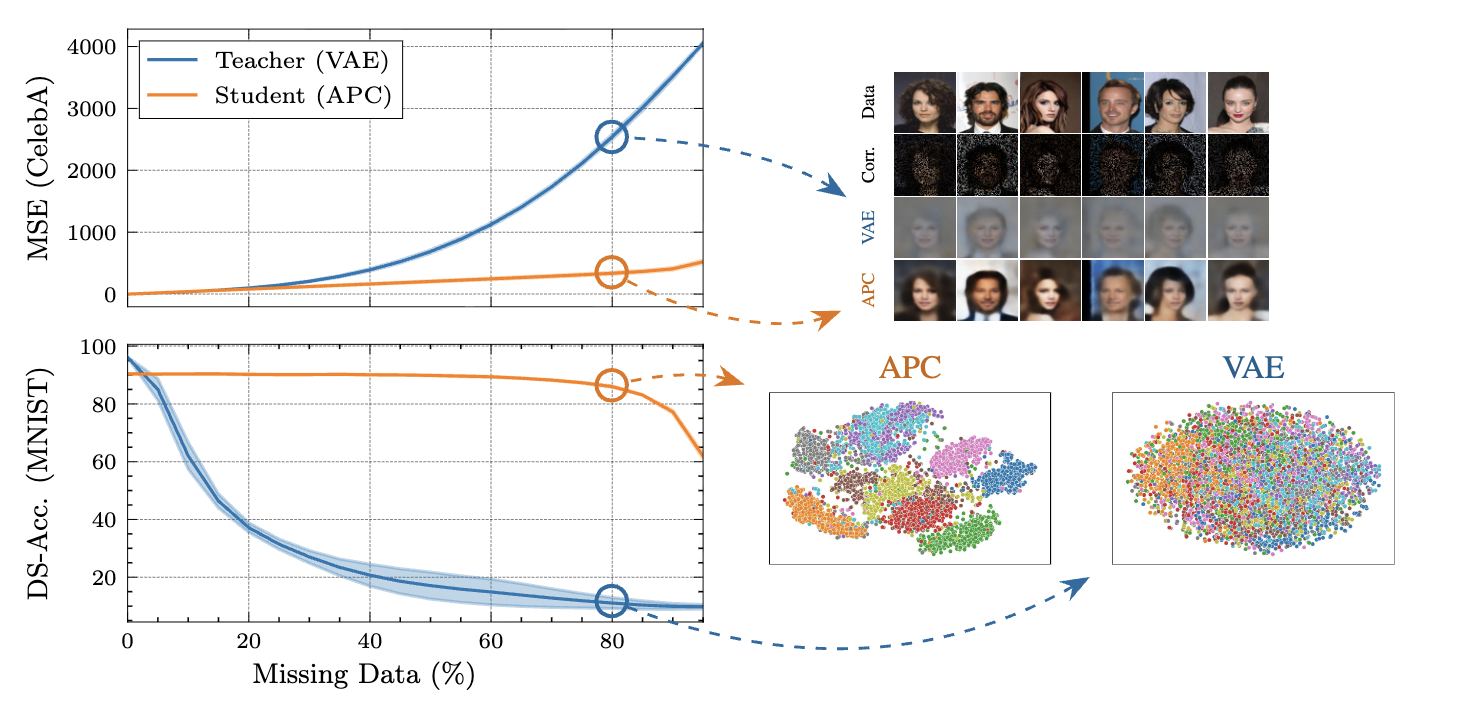
Learn probabilistic representations that remain useful when evidence is incomplete.
What This Enables
Models that can generate, score, marginalize, condition, and reason about missing or partial evidence in a single probabilistic framework.
Representative Papers
Selected work connected to this theme.
Neurosymbolic AI: Foundations and Applications, pages 183–222. Wiley Online Library, 2026
The 43rd International Conference on Machine Learning (ICML), 2026
The Eighth Workshop on Tractable Probabilistic Modeling (TPM), 2025
Core Question
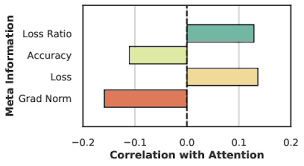
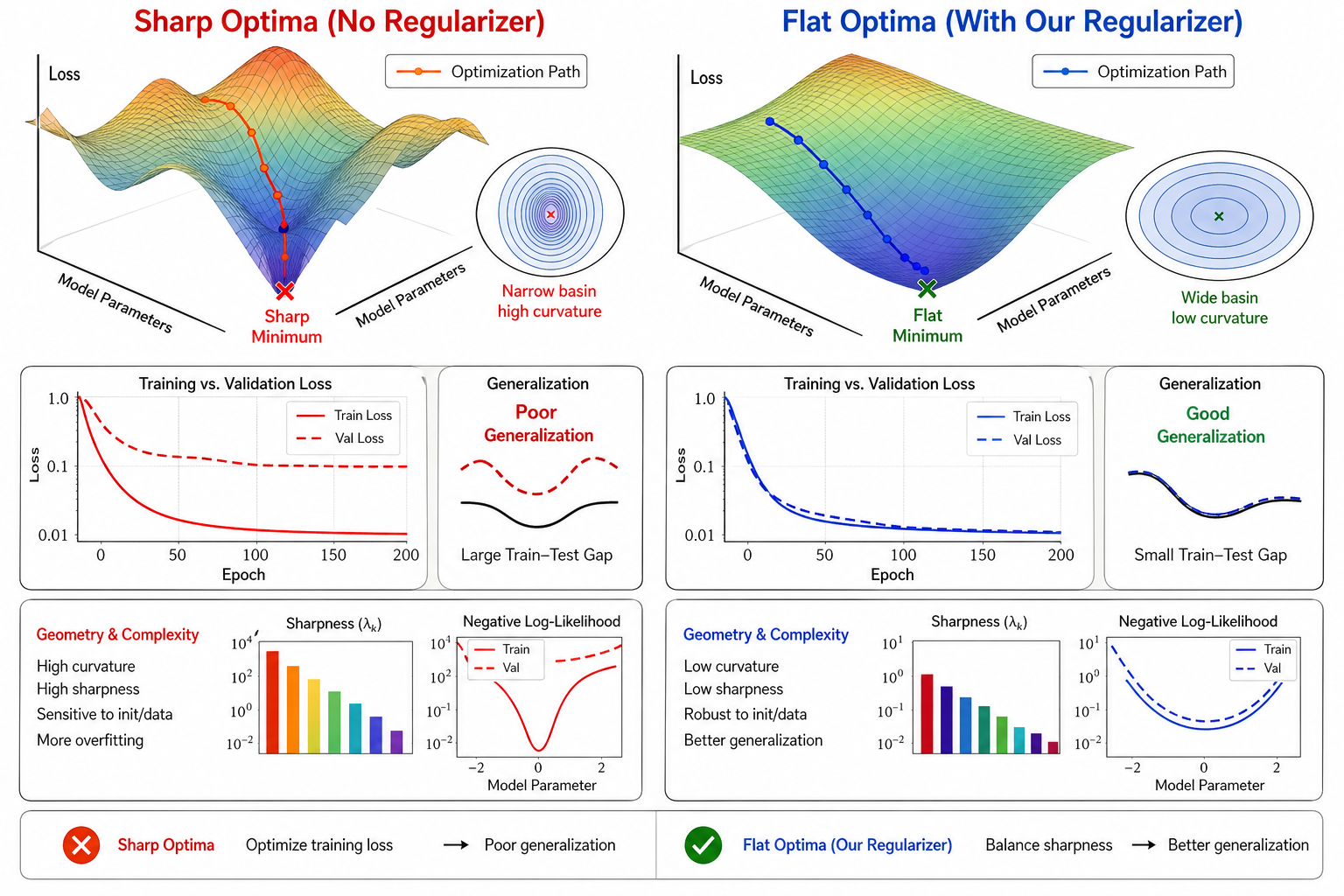
How do generative models learn, converge, overfit, and generalize?
Approach
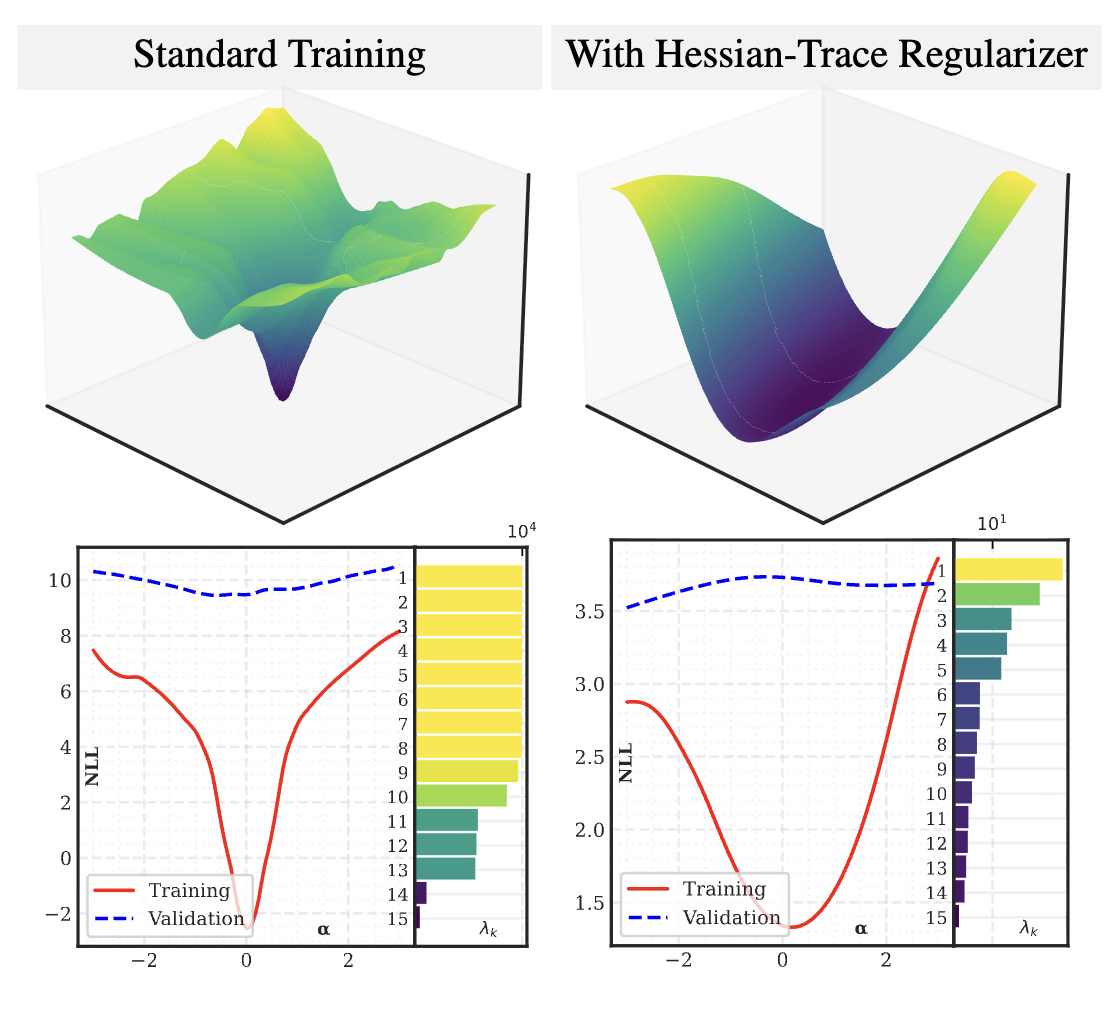
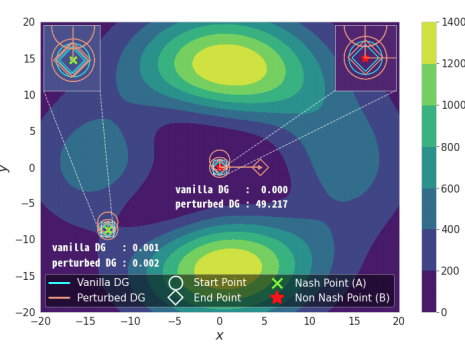
I study training behavior through measurable quantities such as duality gaps, curvature, sharpness, and tractable second-order structure, connecting adversarial training diagnostics with PC optimization.
Visual Model
Research Problems
Diagnose when adversarial generative training is converging or cycling.
Understand when expressive PCs overfit through sharp likelihood landscapes.
Use tractable model structure to design reliable generative learning objectives.
What This Enables
Training procedures whose behavior can be monitored, analyzed, and improved instead of treated as a black box.
Representative Papers
Selected work connected to this theme.
The 40th Annual AAAI Conference on Artificial Intelligence (AAAI), 2026
Proceedings of the 38th International Conference on Machine Learning (ICML), PMLR 139, 9660–9670, 2021
Core Question
How can AI systems remain reliable when evidence is limited, shifted, missing, noisy, or conflicting?
Approach
I design evaluation protocols and probabilistic models for deployment stressors: few-shot adaptation, task shift, missing modalities, corrupted sources, and conflicting information.
Visual Model
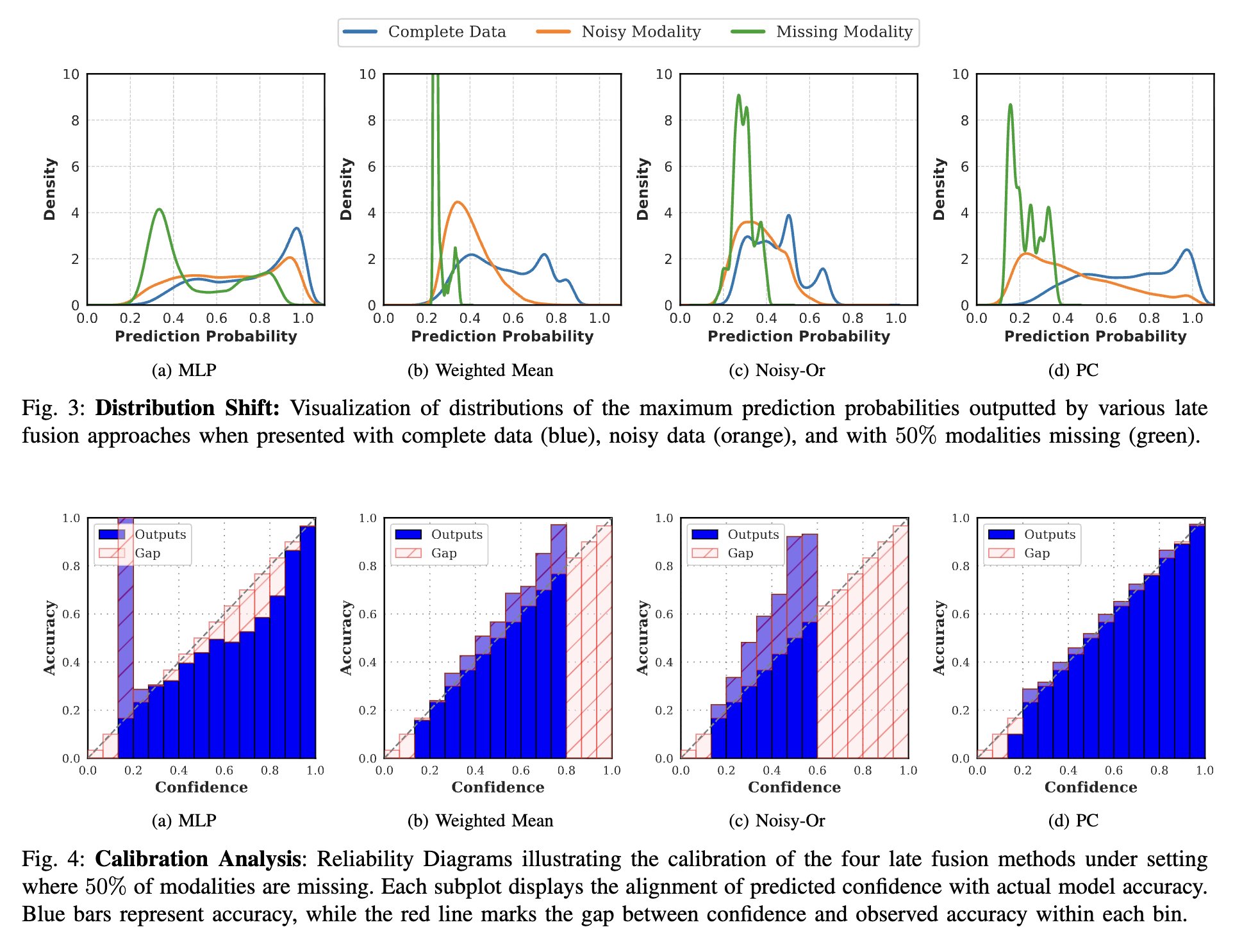
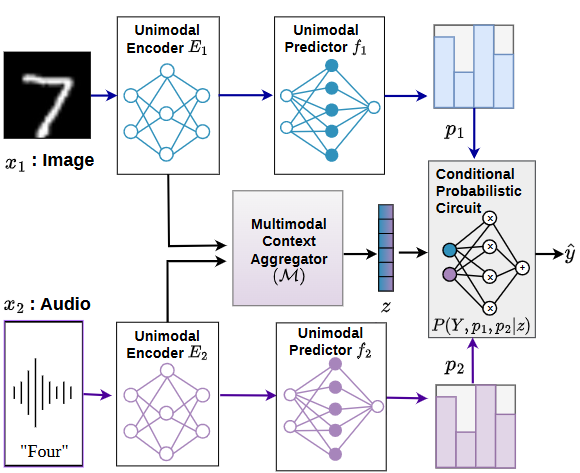
Robust multimodal fusion
Reliability analysis for late multimodal fusion with probabilistic circuits.
Research Problems
Stress-test adaptation when tasks differ from the training regime.
Model reliability under missing, corrupted, or contradictory modalities.
Expose deployment failures that average benchmark accuracy can hide.
What This Enables
Systems that know when adaptation helps, when evidence is unreliable, and how to make decisions under realistic uncertainty.
Representative Papers
Selected work connected to this theme.
The 29th International Conference on Information Fusion (FUSION), 2026
The 27th International Conference on Information Fusion (FUSION), 2024
SN Computer Science, 4(5), 539. Springer, 2023
Core Question
How can probabilistic models incorporate human guidance, domain knowledge, constraints, and credibility-aware reasoning?
Approach
I use tractable probabilistic inference as a substrate for constraint-aware learning, human feedback, knowledge-guided modeling, and auditable reasoning about source credibility.
Visual Model
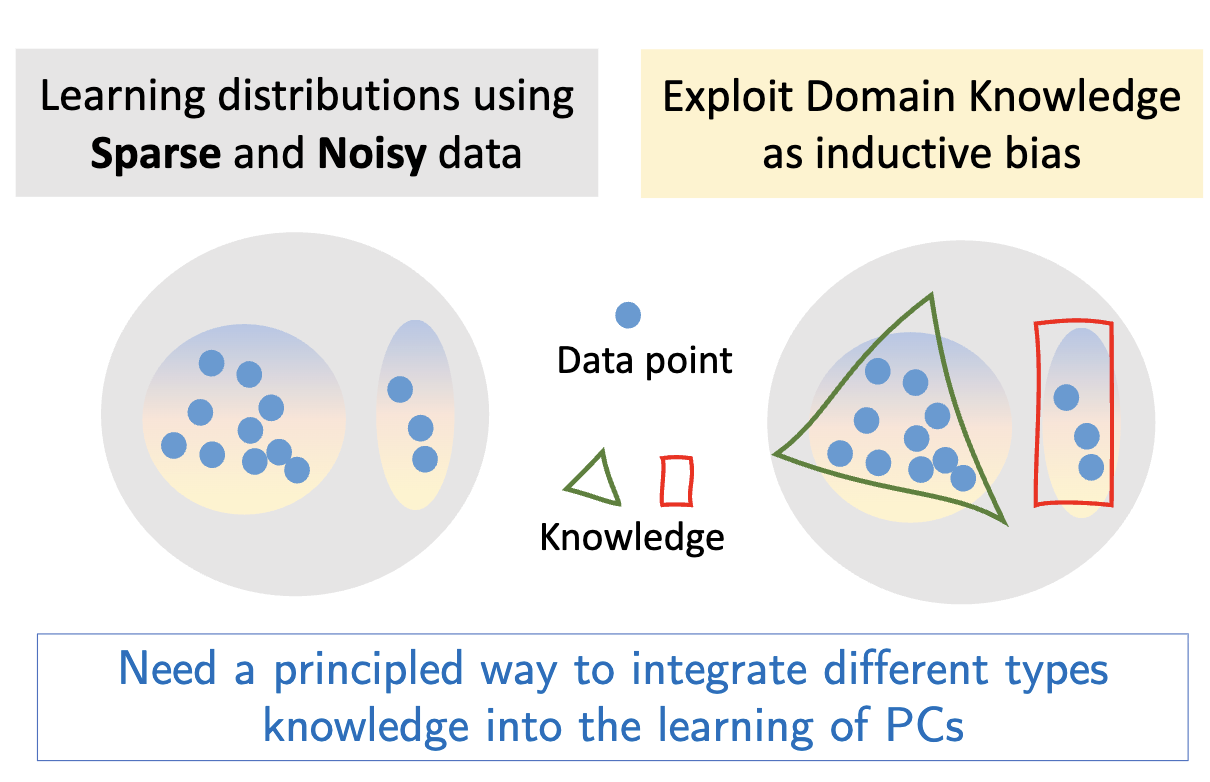
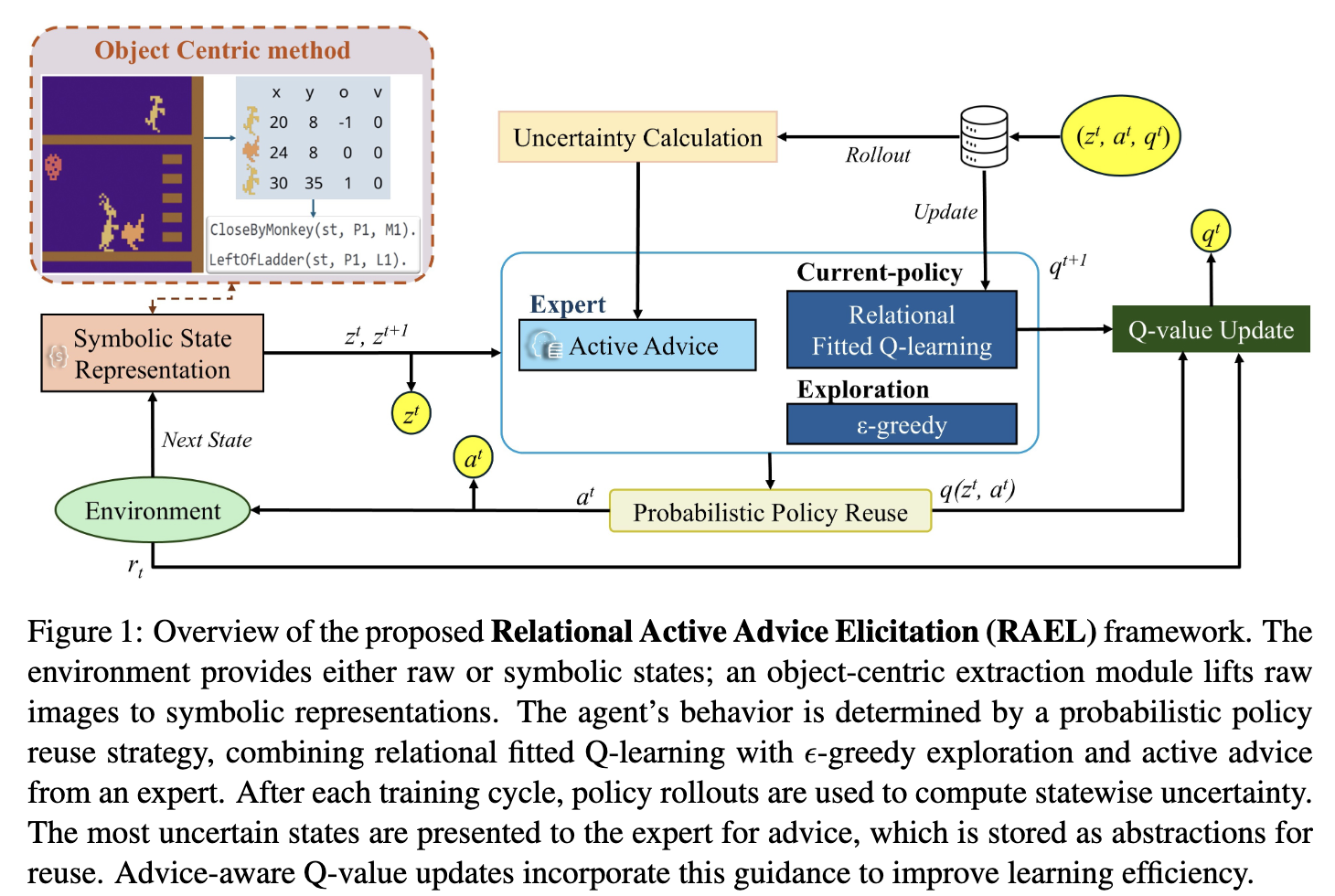
Human-allied probabilistic circuits
A unified interface for incorporating feedback and constraints into PC learning.
Research Problems
Express domain knowledge as probabilistic constraints during learning.
Support human feedback without losing calibrated uncertainty.
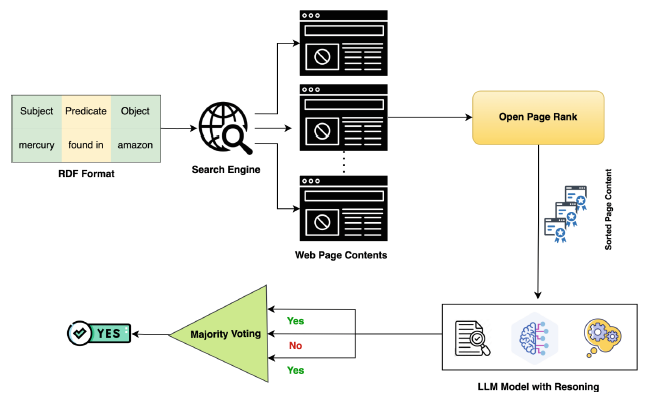
Use inference queries to make credibility and reasoning inspectable.
What This Enables
AI systems that collaborate with human expertise, respect structured knowledge, and expose the probabilistic assumptions behind their decisions.
Representative Papers
Selected work connected to this theme.
The Twelfth Annual Conference on Advances in Cognitive Systems (ACS), 2025
The 29th Pacific-Asia Conference on Knowledge Discovery and Data Mining (PAKDD), 2025
The 39th Annual AAAI Conference on Artificial Intelligence (AAAI), 2025
Cross-Cutting Methods
Common tools and evaluation lenses that connect the research program.